
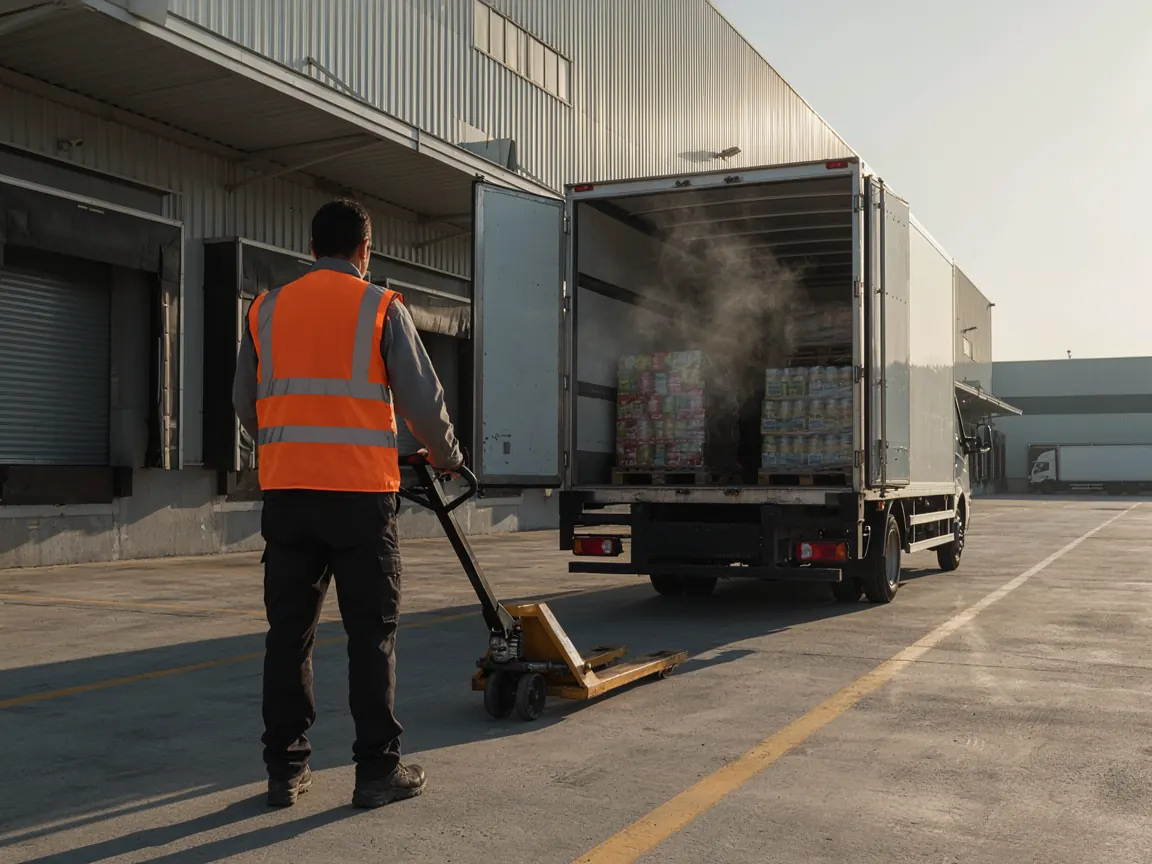
A pharmaceutical distributor is judged by what the product experienced between the warehouse door and the pharmacy shelf. A van that arrived on time with insulin that spent two hours above 8 °C has still failed. Drug transport temperature monitoring closes that gap by recording the cargo's temperature continuously and tying it to the vehicle's position, so every consignment carries its own evidence. This page describes how distributors in Saudi Arabia use HHET's temperature and humidity monitoring system together with GPS tracking, and where each sector-specific page fits. See the industries overview for the other sectors we serve.
SFDA requirements for drug transport and storage
Medicines are regulated products from the licence to the loading bay. The Saudi Food and Drug Authority (SFDA) licenses pharmaceutical establishments and publishes expectations for storage and distribution that are generally aligned with Good Storage and Distribution Practice (GSDP). In practice, an inspector or a customer's quality team asks for the same things: what temperature range the product requires, how it was controlled and recorded, and what was done when it went wrong.
SFDA drug transport expectations depend on the product class, labelled storage range and your establishment's licence. HHET does not treat any single threshold as universal and does not describe a device as SFDA approved. We confirm the current guidance for your licence before specifying sensors, calibration and report formats. The storage side of the picture is covered on the SFDA temperature monitoring page.
For a distributor, the useful reading of this is operational. Define the range per product family. Measure with calibrated probes placed where the product sits, not where the air is coldest. Keep a continuous record with times and locations, and keep the response to every excursion on file. Everything else is detail.
Tracking the vehicle and the cargo together
Most distributors run two separate records: a tracking screen for the fleet team and a data logger the quality team downloads afterwards. The failures sit in the gap between them. When a van is stuck at a checkpoint for ninety minutes, nobody on the tracking side knows the cargo is warming, and nobody on the quality side knows where the van is. This is what supply chain temperature monitoring should fix: one unit in the vehicle reporting position, cargo temperature and door state to one platform.
On the platform, a consignment is a single timeline. The dispatcher sees where the van is, the cargo temperature beside it and the limits for the products on board. Compartments are monitored separately, since a vaccine tote at 2 to 8 °C and a controlled-room-temperature pallet in the same vehicle have different limits. The mechanics of fitting probes, door contacts and, where available, reefer controller data are described in refrigerated truck monitoring. Distributors who also operate commercial vehicles for licensed transport will want to check the Transport General Authority (TGA) and WASL requirements for those vehicles; the tracking unit that serves cargo monitoring can also serve that requirement where the activity calls for it.

Excursion alerts and audit reports
Excursions in drug transport have four usual causes: a body that was not pre-cooled, doors held open at a stop, a unit running at the wrong set-point, and delay in traffic or at a checkpoint in summer heat. Each one has a signature on the record, which is why the alert rules are built around them.
| What happens on the route | What the record shows | Alert and response |
|---|---|---|
| Van loaded into a warm body | Cargo temperature already above range at departure | Pre-departure check blocks or flags the trip; dispatcher holds the van |
| Door left open at a pharmacy drop | Door event longer than the planned delivery stop, temperature rising | Alert to dispatcher; call to driver to close and resume |
| Reefer unit fault or wrong set-point | Actual drifting from set-point, or set-point outside product range | Alert with trend; swap vehicle or transfer product per your procedure |
| Long delay in Jeddah or Riyadh summer traffic | Position static, cargo temperature climbing slowly | Early warning before the limit, giving time to reroute |
| Power loss to the monitoring unit | Internal battery takes over, loss-of-main-power flag | Alert; record continues so the trip remains documented |
After the route, the audit report is per consignment. It shows loading time and place, cargo temperature against its limits across the whole journey, door events with locations, arrival time inside the customer's geofence and the temperature at hand-over. Exported as PDF or shared as a link, it goes into the delivery file or to a customer's quality team that asks for it. This is the practical meaning of cold chain logistics monitoring: not a dashboard, but a document you can hand to an auditor. For the vaccine and biologics side, the page on pharmaceutical and vaccine monitoring describes how the same logic runs inside the warehouse.
Ask your largest pharmacy customers what they want on a delivery report before you design yours. Their receiving staff often need one number and one signature line, not a full trend.
Calibration, placement and the cold start
Three details decide whether a transport record survives scrutiny. The first is calibration: probes used for compliance records should carry a calibration certificate traceable to a recognised standard, with the re-calibration date held on the platform and flagged ahead of time. The second is placement: a probe taped near the evaporator reads colder than the product, while one by the door reads warmer. HHET places probes at the warmest and coldest points of the load, typically one near the rear doors and one in the centre of the body, and records the positions on the installation sheet. The third is the cold start. A body should be pre-cooled to its range before loading begins, and the record should show it was.
For a distributor serving pharmacies across Jeddah and the Western Region, the cold start is also the easiest saving. Loading a hot body at a busy dock in July and then correcting it on the road is the most common reason for an early excursion. Reading the first twenty minutes of every trip catches it.
Recommended HHET solutions
A distributor typically needs the vehicle side and the building side to produce the same kind of record. We usually propose them in this order.
- Vans and trucks: tracking unit with calibrated cargo probes per compartment, door contacts and reefer set-point where the controller allows it, plus transit alerts to dispatch and the responsible pharmacist.
- Warehouse and cold rooms: wireless sensors with alarms and an escalation chain, so storage and transport sit in one account.
- Third-party legs: portable loggers travelling with the product where a courier or carrier has no HHET unit; the guide on vaccine storage temperature explains the ranges these records are checked against.
- Reporting: per-consignment reports, monthly excursion summaries and calibration certificate records retained on the platform.
Price depends on the number of vehicles and compartments, probe count and calibration certificates, controller integration, gateways in warehouses and the subscription. To plan a rollout, request a quote with your vehicle types, the product classes you carry and your delivery areas.
Last reviewed .