
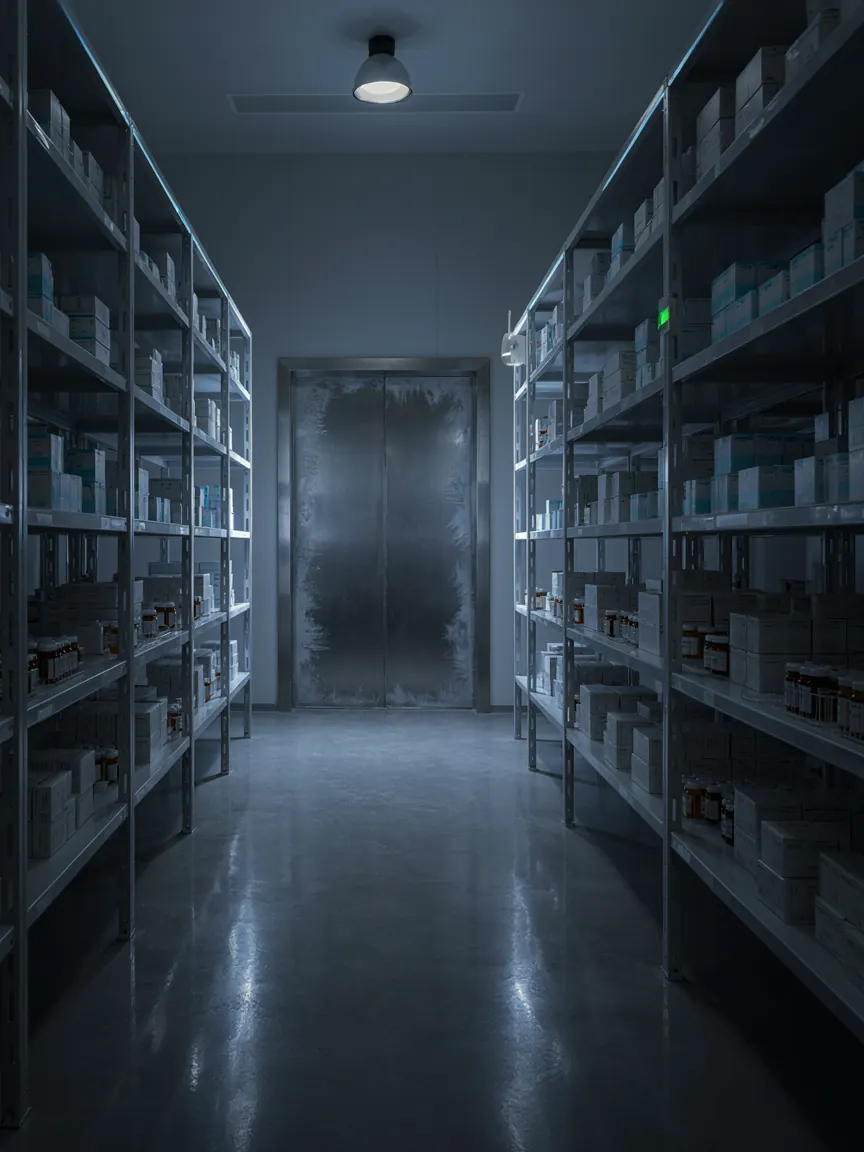
A vaccine that has been too warm or frozen can look exactly like one that has not, which is why the fridge needs a witness. This page covers fixed temperature and humidity monitoring for the places where medicines wait: pharmacy refrigerators, clinic vaccine fridges, and pharmaceutical warehouses. It is the product-and-installation view; the regulatory background sits on a separate page, linked below.
Why vaccines and medicines need continuous monitoring
Most vaccines and many biologics are labelled for storage between 2 and 8 °C. Some are damaged by cold as much as by heat: freezing can destroy the adjuvant in certain vaccines without any visible change in the vial. Other medicines are labelled for controlled room temperature, commonly 15 to 25 °C or up to 30 °C, and the exact range is whatever the product label says. A thermometer on the door tells you the temperature at the moment someone looks. It says nothing about the three hours on Thursday night when the compressor tripped.
Jeddah makes the problem sharper. Outdoor temperatures in summer push refrigeration equipment to its limit, pharmacy back rooms are often not air-conditioned well, and a power cut during a weekend can last long enough for a domestic-type fridge to leave its range. Continuous monitoring turns the question from "was it ever out of range?" into a record you can read: every reading, every alert, who acknowledged it.
Pharmacy refrigerator monitoring
A pharmacy usually has one to four fridges and a dispensing area, so the system needs to be small, quiet and hard to get wrong. HHET fits a wireless sensor to each refrigerator with a probe inside the cabinet, and a room sensor for the dispensing area where ambient products are kept. The probe is normally placed in a buffered bottle or glycol-type holder so that it follows the temperature of the product rather than the air that swings every time the door opens. That distinction matters: an alert based on air temperature alone either triggers on every stock check or has to be set so loosely that it misses real problems.
Readings are sent to the HHET platform at an interval set for the application, and the pharmacist sees a simple current-status view on a phone. Door-open events can be recorded, so a flat line of readings can be told apart from a fridge that is being left ajar. Where a clinic or pharmacy keeps a dedicated vaccine fridge, it gets its own alarm settings, separate from the general-stock fridge next to it.
| Location | Typical sensor placement | What the record is for |
|---|---|---|
| Pharmacy fridge | Buffered probe inside, mid-shelf, away from the cooling plate | Show stock stayed at 2 to 8 °C, or exactly when it did not |
| Clinic vaccine fridge | Buffered probe plus door sensor | Evidence for each vaccine batch, door-open pattern |
| Dispensing area / shelving | Room sensor at shelf height, not near the door or vent | Ambient storage per product label, humidity where relevant |
| Pharmaceutical warehouse | Sensors at mapped warmest and coldest points, plus dock | Zone-level record across racking and loading |
Pharmaceutical warehouse monitoring
A warehouse is a different problem from a fridge. Temperature varies by height, by distance from the dock doors and by the position of the cooling units, so one sensor in the middle of the floor proves very little. For pharmaceutical storage, sensors are placed at the points a mapping study identifies as the warmest and coldest, then supplemented near docks, quarantine and returns areas. The full approach to mapping, racking and zones is in the guide to warehouse temperature and humidity monitoring, and the same logic applies here with tighter alarm limits and a stricter record.
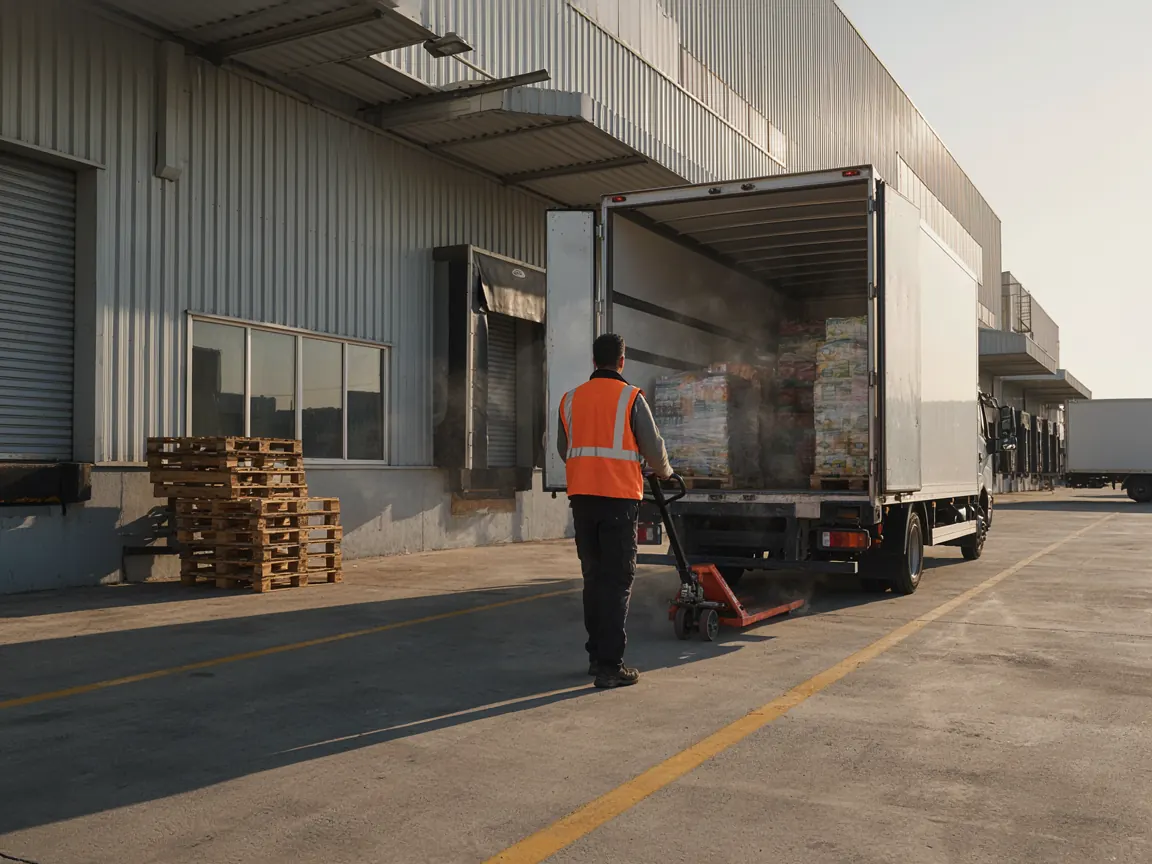
Where product arrives or leaves by road, the vehicle needs the same watchfulness as the store. A cold-chain break on the truck is invisible once the pallet is back on the rack, so the platform can hold the vehicle record and the warehouse record side by side. The trucking side is covered under refrigerated truck monitoring.
Setting up: what we need from you
A survey starts with a list. For each refrigerator or store: what it holds, the labelled range, who looks after it and who can respond out of hours. From that list HHET proposes the number and type of sensors, where the gateway should sit, and what alert limits to start with. Installation usually takes less time than the survey, because most pharmacy and clinic units need only a probe and a radio sensor, with no building work. After commissioning, we recommend a short period of watching the graphs: the first fortnight often reveals a fridge that cycles more than it should, a door that does not seal, or a shelf where stock sits too close to the cooling plate. Fixing those problems is cheaper than discarding a batch, and the record from the first weeks becomes your baseline for what normal looks like in each unit.
Alerts, backups and power failure
The most useful property of a monitoring system is what it does when something fails, including itself. A pharmacy sensor that dies with the building power is worthless at the exact moment it is needed. HHET specifies sensors with their own battery and the ability to store readings while the connection is down, then upload the gap when it returns, so the record has no hole in it. Gateways can be supplied with battery backup or a cellular uplink so that a Wi-Fi outage does not blind the system.
- Delay before alerting. A short delay avoids alarms for a door left open during restocking, but it must be short enough that a real failure is caught within the product's tolerance.
- Escalation. The first alert goes to the pharmacist on duty by SMS or app notification; if nobody acknowledges it within a set time, it moves to a second person and then a manager.
- Power status. A separate alert on mains loss means the team knows the fridge is on borrowed time before the temperature moves.
- Acknowledgement. Every alert is logged with who responded and what they did, which is the part inspectors ask about.
Write down, in advance, where the vaccines go if the fridge fails: which other fridge, who holds the key, who decides. An alert at 2 a.m. is only useful if the person receiving it already knows the next step.
SFDA and GSDP records
Establishments that store medicines in Saudi Arabia are generally expected to keep products within labelled conditions and to be able to show it. The monitoring system's job is to produce records that are continuous, time-stamped, attributable and retrievable: a graph and a table for any period, the alerts raised, and what was done about each one.
Requirements depend on your licence category and the products you handle, and the Saudi Food and Drug Authority (SFDA) revises guidance from time to time. HHET confirms the current guidance for your activity before quoting, and does not describe any sensor as “SFDA approved”. See the SFDA temperature monitoring page for how HHET approaches Good Storage and Distribution Practice (GSDP) records.
Reports can be exported for a day, a month or a batch window, and sensor calibration details are kept against each device. For a plain explanation of ranges and what to do after an excursion, read the vaccine storage temperature guide. If you want a survey of your fridges or stores, request a quote and say how many units and sites you have.
Last reviewed .