

On this page
- What a car tracking device does, and what it does not
- Device types: wired, OBD, battery, and the add-ons that extend them
- Comparison: which type of tracker suits which job
- How to choose a tracker by vehicle and by use
- How a tracker connects: SIM, data and the platform
- Professional installation or installing it yourself
- Anti-theft protection and engine cut-off
- What decides the price of a car GPS tracker
- Warranty, support, and a device that stops reporting
- Beyond the car: assets, animals, fleet software and temperature
What a car tracking device does, and what it does not
A car tracking device is a compact unit fixed inside or beneath a vehicle. It works out its own position from satellite signals and sends that position, together with speed, heading and whether the ignition is on, over the mobile network to a platform you log into. On the HHET platform the position appears on a live map, builds into trip history and playback, and triggers the alerts you define: a vehicle leaving a zone, moving after hours, or exceeding a set speed on the Makkah–Jeddah expressway.
What a tracker is not: a navigation screen, a dash cam on its own, or an app on the driver's phone. It has no display and asks nothing of the driver. Once installed and activated it reports by itself, in most installations every few seconds while the vehicle moves and at longer intervals when parked, so the account holder sees the vehicle without calling anyone.
HHET supplies, installs and supports trackers for everything from a single car to mixed fleets of trucks, vans and delivery bikes across Saudi Arabia, from our base in Jeddah. This page covers the device side: the types, how to match them to a vehicle, how they connect, and what to expect from installation, warranty and support. If your question is about the software and reporting layer rather than the hardware, start with our guide to the vehicle tracking system for Saudi fleets.
Device types: wired, OBD, battery, and the add-ons that extend them
Wired trackers
A wired vehicle GPS tracker connects to the vehicle's permanent power, an ignition signal and ground, and sits behind the dashboard or under a trim panel. Because it draws power from the vehicle it never needs charging, reports continuously, and carries a small backup battery that keeps it reporting for a period if the main supply is cut. Wired units are the ones that accept add-ons: a relay for engine cut-off, fuel-level sensors, temperature probes, door contacts, driver ID readers and cameras. For company cars, trucks, buses and any vehicle that must be linked to the Transport General Authority (TGA) WASL platform, a wired unit is the standard choice.
OBD plug-in trackers
An OBD GPS tracker plugs into the diagnostics port fitted to most cars built since the mid-2000s. There is no wiring, so the install takes minutes, and the unit can read engine data such as RPM, coolant temperature and fault indicators alongside location. The trade-off is visibility: the port is usually below the steering column, so the device can be unplugged, and the platform tells you the moment that happens. Read more about OBD GPS trackers for cars and light vans.
Magnetic and battery-powered trackers
A battery tracker has no connection to the vehicle at all. It attaches with a magnet or a bracket to a trailer chassis, a container, a generator or the underside of a car, and reports on a schedule you choose. Its life depends on that schedule: a unit set to report once or twice a day can run for months on one charge; one set to report every minute lasts days. For assets with no power source, and as a second layer in high-value vehicles, they are the practical choice. See magnetic, compact and small GPS trackers for placement and battery guidance.
Add-ons: sensors and accessories
- Fuel sensors. A capacitive rod fitted into the tank, or a reading taken from the vehicle's CAN bus, so refuels and sudden drops appear as events with a time and a place. Covered in depth under fleet fuel monitoring.
- Temperature probes. One or more sensors inside a refrigerated body, reported with the location, so a chilled delivery is tracked for where it is and how cold it is.
- Door contacts. A magnetic switch on cargo doors records every opening against the map.
- Driver ID. An RFID or iButton reader so each trip is attributed to the driver who tapped in, which matters for shared vehicles and for driver behaviour monitoring.
- Cameras. A road-facing or cab-facing camera that records events such as harsh braking, with clips uploaded to the platform. See dash cams and video telematics.
- Relay for engine cut-off. A relay on the starter or fuel-pump supply that the platform can switch, the basis of anti-theft protection.
Comparison: which type of tracker suits which job
| Device type | Power source | Install time | Best for | Battery life | Sensors and add-ons |
|---|---|---|---|---|---|
| Wired tracker | Vehicle battery (12 V or 24 V), with internal backup | Usually under an hour for a standard install; longer with a relay or sensors | Company cars, trucks, buses, rental cars, WASL-linked vehicles | Runs indefinitely; backup covers a period after a power cut | Yes: fuel, temperature, door, driver ID, camera, cut-off relay |
| OBD plug-in tracker | Vehicle OBD port | Minutes | Private cars, pool cars, small fleets of saloons and light vans | Runs while plugged in; some models hold a small backup cell | Limited: engine data through the port, few external sensors |
| Magnetic / battery tracker | Internal rechargeable or replaceable battery | Minutes, no wiring | Trailers, containers, equipment, second layer on high-value cars | Days to months, set by the reporting interval | Usually none; some models sense movement or temperature |
Whatever the type, insist on a 4G GPS tracking device. Older 2G-only units depend on network capacity that operators are steadily reallocating, and a tracker that loses its network is a tracker you pay for twice.
How to choose a tracker by vehicle and by use
Private car
For a family car the goals are usually three: recovery if it is stolen, knowing where a shared car is, and a record of trips. A wired unit with a backup battery, placed out of sight behind the dash, is the strongest option, because it keeps reporting even if the vehicle's battery is disconnected. An OBD unit is quicker to fit and simple to move to the next car. If theft is the main concern, pair the wired unit with a cut-off relay; see the anti-theft section below.
Company cars and pool vehicles
Here the tracker is a management tool as much as a security one. Wired units with ignition sensing give accurate trip starts and stops, mileage for expense claims and maintenance, and after-hours movement alerts. Add driver ID where several people share a vehicle. From a handful of cars upward the reporting layer matters more than the box, which is where a fleet management system earns its keep.
Rental and taxi fleets
Rental cars leave your sight for days with a stranger at the wheel. Operators typically fit a wired tracker with a cut-off relay, geofences for the permitted area, and mileage reporting against the contract. In Saudi Arabia, car rental and taxi are licensed transport activities, and vehicles in those activities are expected to report to WASL through an approved device. Our page on tracking for rental and taxi fleets covers both the protection and the compliance side.
Trucks and heavy vehicles
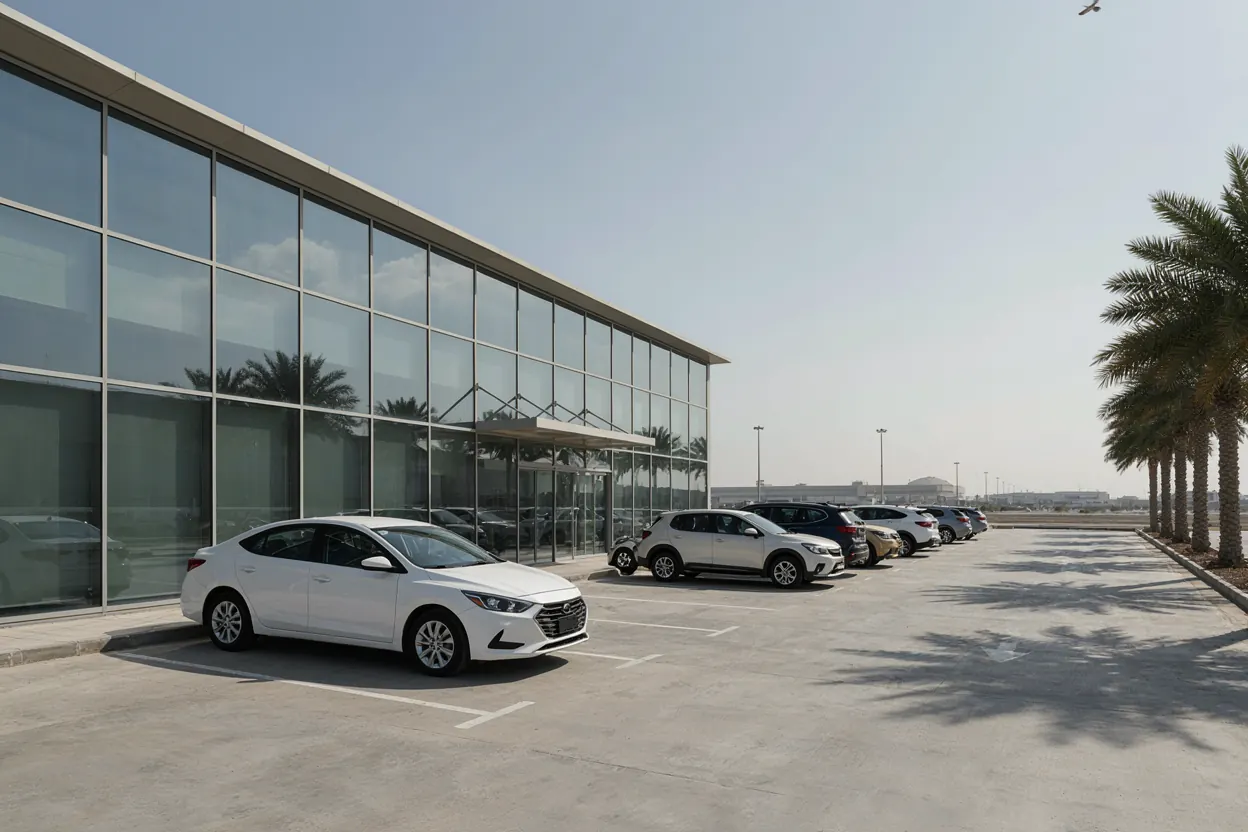
Trucks run on 24 V systems, cover long distances and work in dust and heat. A truck tracker is a wired unit rated for 24 V, often with a fuel sensor and a driver ID reader, mounted in the cab or on the chassis with the antenna positioned for a clear view of the sky. Refrigerated trucks add temperature probes to the same unit. See truck tracking across Saudi Arabia.
Motorcycles and delivery bikes
Delivery bikes need a compact, waterproof unit wired to the bike's 12 V supply and tucked under the seat or fairing, with movement alerts for the hours the bike should be parked. HHET fits these to the common delivery models; details are on motorcycle and delivery bike tracking.
Trailers, containers and equipment
Anything without its own power takes a battery tracker, or a wired unit fed from the trailer's lighting supply when coupled and running on its backup when not. Pairing a trailer's tracker with the truck pulling it gives you coupling and detachment alerts. See trailer and container tracking and heavy equipment and asset tracking.
How a tracker connects: SIM, data and the platform
Every tracker that reports live carries a SIM. The device computes its position from GPS and, on most current models, from other satellite constellations as well, then pushes a small packet of data over the 4G network to a server. The HHET platform receives those packets, stores them, draws them on the map and runs your alert rules. The data volume per vehicle is small, typically a few megabytes a month, but the connection must be dependable, which is why the SIM, the data plan and the platform are usually bundled into one subscription.
HHET can supply and manage the SIM so you never hold a telecom contract per vehicle, or work with SIMs you already have. Coverage follows the mobile networks: strong across cities and the main highways, with gaps in remote desert where a tracker stores positions and uploads them when the signal returns. For the detail, including what a tracker without a SIM can and cannot do, see GPS tracker SIM cards and subscriptions and our plain-language guide to how GPS vehicle tracking works.
A "tracker without a SIM" is a logger. It records positions internally and shows them only when you retrieve the device and read it. It cannot tell you where the car is now and it cannot raise an alert. Our article on trackers with no SIM or subscription sets out where they fit and where they fall short.
Professional installation or installing it yourself
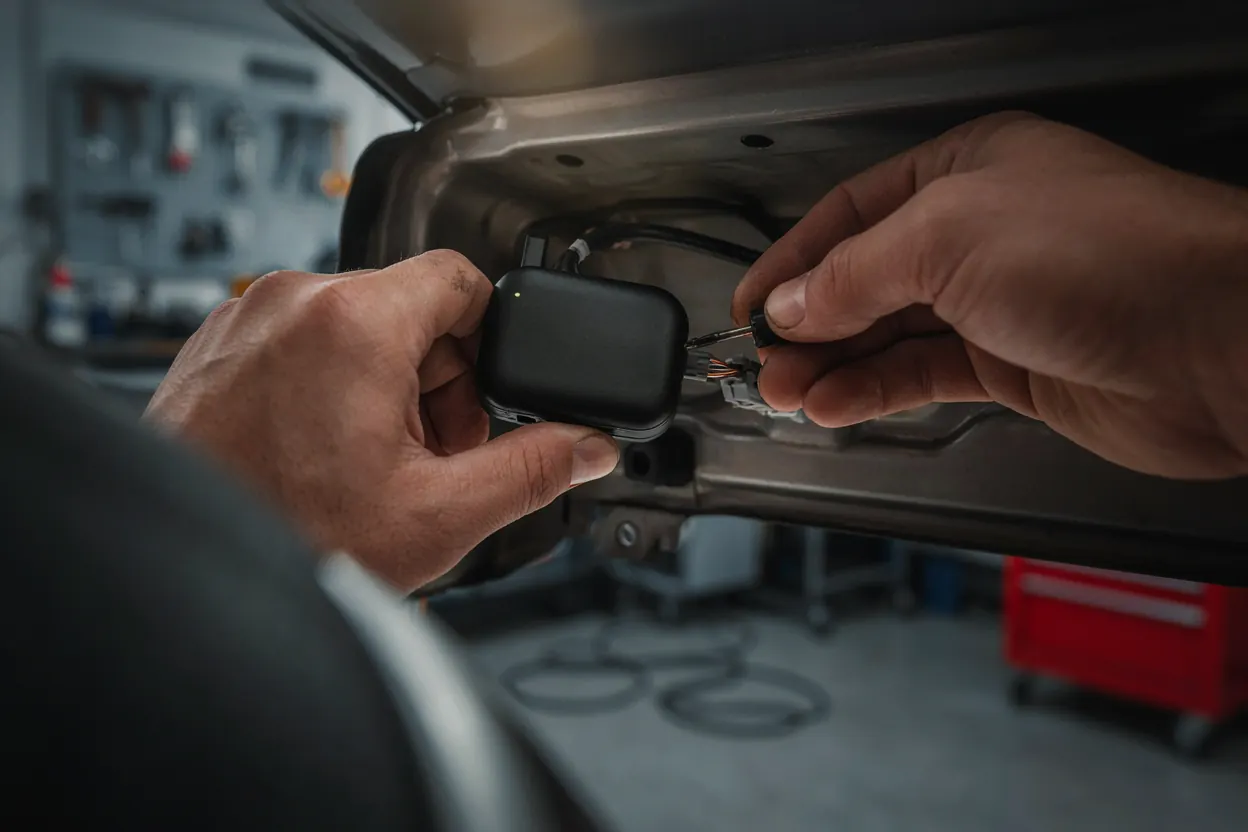
OBD trackers are designed to be plugged in by the owner, and a battery tracker needs only a clean, flat surface for its magnet. Wired trackers are different. A competent person who knows the vehicle's wiring can fit one, but most buyers hand the job to a technician for four reasons:
- Finding a permanent 12 V or 24 V feed and a true ignition signal on a modern vehicle takes experience and the right wiring diagram.
- Antenna placement decides whether you get a fix in seconds or in minutes, and whether that fix holds under a metallic-tint windscreen or a steel roof.
- A cut-off relay wired into the wrong supply can leave a vehicle stranded, or act at the wrong moment.
- The device must be activated on the platform, given the right reporting profile and, for regulated vehicles, linked to WASL. A box that is wired but not activated is doing nothing.
HHET technicians install at our workshop in Jeddah or at your premises, and in other cities by arrangement. Every installation ends with the device reporting live on your account and a short walk-through of the HHET app. The full process is set out on our car GPS tracker installation service page; to understand the steps before deciding, read how to install a GPS tracker in a car.
Vehicles used in licensed transport activities, among them taxi, car rental, bus and freight, are required by the TGA to carry an approved tracking device linked to the WASL platform. A self-fitted consumer tracker does not meet this: the device model must be on the approved list and the linking is completed with the vehicle and operator details. TGA-approved tracking and WASL integration explains which activities are covered and how HHET handles the linking.
Anti-theft protection and engine cut-off
Every live tracker is a vehicle locator device by default, because it tells you where the vehicle is. A dedicated anti-theft set-up adds three things. First, alert rules: movement with the ignition off, which is the signature of towing; ignition on outside working hours; or exit from a geofence around your yard or compound. Second, a backup battery and a tamper alert, so cutting the vehicle's battery or the tracker's wiring sends a notification instead of silence. Third, a relay that lets an authorised user prevent the engine from restarting once the vehicle has stopped.
The relay is never used to stop a moving vehicle. Well-designed systems only act when the vehicle is stationary or below a walking pace, and HHET configures them that way, with the command restricted to named users and logged. How this works in practice, including recovery with the police, is on our page about anti-theft GPS tracking with engine cut-off.
What decides the price of a car GPS tracker
We do not publish prices on this page because the right figure depends on the vehicles and what you need the system to do. The drivers are consistent, and knowing them lets you compare quotes fairly:
- Device class. A wired 4G unit with a backup battery costs more than a basic OBD plug-in; units rated for 24 V trucks, high cabin temperatures or outdoor mounting cost more again.
- Add-ons. Each sensor, relay, reader or camera adds hardware and installation time. A fuel sensor is the most involved; a door contact the least.
- Installation. Workshop fitting in Jeddah is the simplest case. A site visit, a large batch, or vehicles spread across cities changes the labour.
- Subscription. The recurring fee covers the SIM and data, the platform, storage of history and alert channels such as SMS. Higher reporting frequency and video upload use more data.
- Compliance. Devices for regulated vehicles must be on the approved list and linked to WASL, which affects both the device choice and the set-up time.
- Volume. Fleets of tens or hundreds of vehicles are quoted differently from a single car.
For typical ranges and where the money goes, see GPS tracker prices in Saudi Arabia. For a figure for your own vehicles, request a quote with the number and type of vehicles and what you want to track, and we will come back with a proposal.
Warranty, support, and a device that stops reporting
Every device HHET supplies carries a manufacturer's warranty against defects. The period depends on the model and is stated on your quotation and invoice. Installation work is covered by HHET: if a connection we made fails, we put it right.
Support is where a tracker supplier earns its subscription. In most cases a device that has "stopped reporting" has not failed: the vehicle is parked underground, the SIM has reached a data limit, or the battery was disconnected during a repair. Our platform support team checks the device's last contact, its signal and power readings and its SIM status remotely before anyone drives anywhere. If the unit does need attention, a technician sees it at our Jeddah workshop or on site, and a replacement is fitted under warranty where the fault is covered.
Support is in Arabic and English, from the team in Jeddah that installed the device.
Beyond the car: assets, animals, fleet software and temperature
The same hardware families cover more than road vehicles. Battery trackers protect generators, compressors and site equipment. Lightweight collar and leg units with long reporting intervals, and satellite options for areas with no mobile signal, are available for camel and falcon tracking on request.
A tracker is also the first half of two larger HHET systems. Across a fleet, the trackers feed the live map, driver scores and maintenance schedules of the HHET platform. In refrigerated transport, the same unit carries temperature probes, and those readings join the cold-room and warehouse sensors described under temperature and humidity monitoring, so a pharmaceutical distributor sees the vehicle and the cargo in one place. Our page on refrigerated truck monitoring shows how the two meet.
Buying and fitting questions are answered in our guides: where to place a GPS tracker in a car, the GF-07 tracker guide, the TKSTAR tracker guide and where to buy a GPS tracker in Saudi Arabia.
Last reviewed . HHET reviews pillar guides every six months for regulation, price-driver and device changes.