

Any company that stores or distributes medicines in Saudi Arabia works under the Saudi Food and Drug Authority (SFDA). Among the many things the SFDA looks at during licensing and inspection is how temperature and humidity are controlled, monitored and recorded, in storage and in transport. This page explains in practical terms what that generally involves and how HHET's temperature and humidity monitoring systems are specified to produce the records an inspector asks for. It is written for warehouse managers, pharmacists and quality staff who need to understand the shape of the requirement; it is not a substitute for the SFDA's own guidance.
SFDA guidance documents and requirements are revised from time to time, and the detail that applies to you depends on your licence category and the products you handle. HHET confirms current SFDA guidance for your activity before quoting and before any system is described as meeting a requirement. HHET does not describe any sensor or logger as "SFDA approved": the SFDA assesses establishments and their practices, and a monitoring system is one part of that.
What the SFDA expects, in plain terms
The SFDA's expectations for the storage and distribution of medicines broadly follow Good Storage and Distribution Practice (GSDP), the internationally recognised framework on which the SFDA has issued its own guidance. For temperature and humidity, GSDP-based expectations generally come down to five things. Storage conditions stated on the product label are maintained. Conditions are monitored continuously, not spot-checked. The devices doing the monitoring are calibrated and the calibration is documented. Storage areas are mapped so the monitoring points are known to be representative. And when conditions leave their range, there is a documented procedure for what happens to the product and who decides. The same principles extend to transport: medicines on the road are expected to be kept, and shown to have been kept, within the labelled range. The sections below take each in turn.
Continuous monitoring and calibrated devices
Continuous monitoring means a record with no gaps, at an interval short enough to catch an excursion while it is happening. In practice that means fixed sensors in every cold room, refrigerator, freezer and controlled-room-temperature area, reporting automatically to a platform that stores every reading. Manual twice-daily readings do not meet the intent, because they cannot show what happened between them. Calibrated devices means every sensor in the record can be traced to a calibration certificate within its validity period, usually issued annually or at the interval your quality system defines. HHET supplies sensors with traceable calibration certificates where the application requires them and can schedule recalibration or sensor exchange so no monitoring point runs on an expired certificate. The certificates are stored against the sensor in the HHET platform so they can be produced with the temperature record during an inspection.
Temperature mapping of storage areas
Mapping shows that the fixed sensors are in the right places. A grid of calibrated loggers is placed through the storage area at several heights, recording through a period that covers the daily cycle and at least one loading period, and the result identifies the warmest, coldest, most humid and least humid points. Permanent sensors are then fixed at those points and the study is kept as evidence. Because Saudi ambient conditions differ so much between seasons, mapping is commonly repeated in the hottest and coolest months, and again after any change to racking, plant or layout. HHET carries out mapping studies with calibrated loggers and produces the report in a form suitable for the quality file. The practical detail of mapping zones, racks and docks is on the warehouse temperature and humidity monitoring page.
Excursion handling and records
An excursion is a period during which a product's storage condition left its labelled range. The SFDA's interest is less in whether excursions ever occur, since doors open and plant fails, than in whether they are detected, recorded, assessed and acted on. In practice that means an alert reaches a responsible person while the excursion is happening; the record shows start time, end time, maximum deviation and the product affected; a qualified person documents the decision to release, quarantine or destroy; and the root cause is recorded. The HHET platform produces the first three automatically and provides a place to log the assessment against the event. Records are retained for the period your quality system and the SFDA require, and exported as PDF or spreadsheet. The guide to vaccine storage temperature describes excursion assessment for the most sensitive product class.
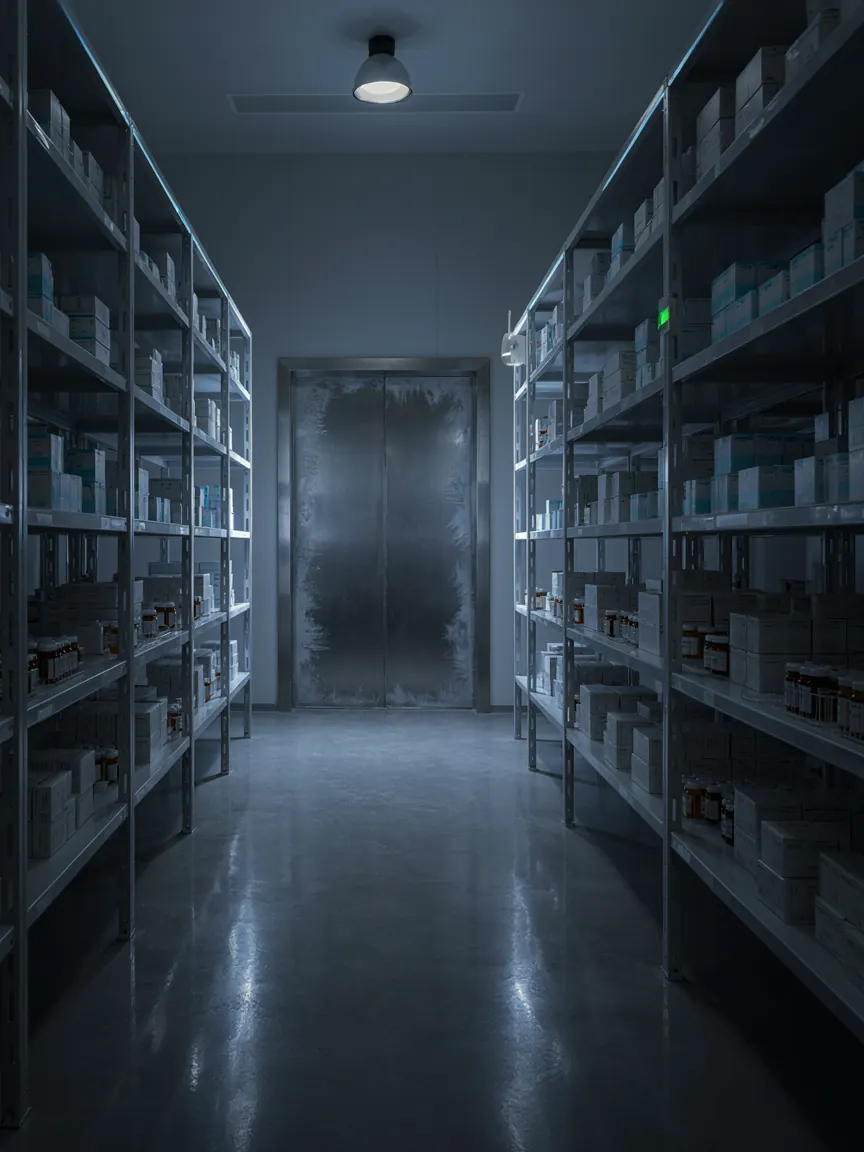
Transport: medicines on the road
GSDP-based expectations do not stop at the warehouse door. Medicines in transit are expected to be kept within their labelled range and the shipper is expected to be able to show it. For a refrigerated vehicle that means continuous cargo-temperature recording during the journey, with alerts to a dispatcher if the body drifts, and a report per delivery. For small consignments or third-party carriers it means a temperature and humidity data logger that travels with the product and is read at hand-over. HHET combines GPS and cargo temperature in one unit so the transport record carries position, time, temperature and door events together; the detail is on the refrigerated truck monitoring page. Distributors moving vaccines and refrigerated medicines across the Kingdom's long inter-city routes are the heaviest users of this set-up.
Requirement area, what it means in practice, HHET component
| Requirement area | What it means in practice | HHET component |
|---|---|---|
| Maintain labelled storage conditions | Cold rooms, fridges, freezers and controlled-room-temperature areas held within the product range | Fixed sensors with limits set per area in the HHET platform |
| Continuous monitoring | Automatic readings at short intervals, no gaps, stored centrally | Wireless or wired sensors, battery-backed gateway, platform record |
| Calibrated monitoring devices | Each sensor traceable to a valid calibration certificate | Sensors supplied with certificates; recalibration or exchange scheduling; certificates stored against each sensor |
| Temperature mapping | Documented study showing where the hot and cold points are, repeated after changes and across seasons | Mapping with calibrated loggers; written report; sensor layout designed from the result |
| Alarm and excursion handling | Alerts reach a responsible person; events are recorded and assessed | Escalating alerts by app, SMS and call; event log with assessment notes |
| Records and retention | Complete, retrievable records for the required period | Exportable PDF and spreadsheet reports; data retained for your retention period |
| Transport conditions | Product shown to have stayed in range in transit | GPS and temperature unit for vehicles; portable loggers for third-party legs |
Preparing for an inspection with HHET
Most inspection findings on monitoring come down to gaps: a sensor with an expired certificate, a month of missing records after a gateway failed, an excursion with no documented assessment, a mapping study from before the racking changed. A system designed for the record from the start removes most of them. HHET specifies the sensors, mapping, calibration schedule and reports together, so the quality file is produced by the system rather than assembled before the visit. For pharmacies and vaccine storage the specifics of buffered probes and fridge monitoring are on the pharmacy and vaccine storage monitoring page. Price depends on the number of monitored areas and sensors, whether mapping and calibration documentation are required, transport units, and the reporting you need. To discuss a monitoring system designed around SFDA expectations for your facility or fleet, request a quote and tell us your licence category and the products you handle.
The same records serve different buildings and journeys. Read how they apply to hospital and laboratory refrigeration and to drug transport for distributors.
Last reviewed .