

A fleet fuel monitoring system adds a fuel-level sensor to the GPS tracker in each vehicle, so the HHET platform can graph fuel against time and distance and tell you where the litres went. It is the module of a vehicle tracking system with the most direct effect on the monthly bill, because fuel is the largest controllable cost in most Saudi fleets and the one with the least visibility: a fuel card tells you what was bought, not what reached the tank or how it was burnt. HHET supplies, calibrates and installs fuel sensors from Jeddah for fleets across Saudi Arabia.
How fuel monitoring works
A sensor reads the fuel level in the tank, or the engine's own fuel data, and passes it to the tracker as one more input alongside position, speed and ignition. The tracker sends it with every report, and the platform turns the series of readings into a graph of litres over the day. Because the same report carries location and distance, every change in level is tied to a place, a time and a trip. A rise is a refuel at a known location and quantity. A fall while driving is consumption, which divided by distance gives litres per 100 km for that trip. A fall while parked, with the ignition off, is a drain, and the platform raises an alert.
The graph is only as honest as its calibration, so HHET calibrates each sensor on installation (explained below) and the platform filters out the sloshing on rough roads and the level change on slopes that would otherwise look like fuel appearing and disappearing.
Consumption against distance, per vehicle and per driver
The consumption report is where most fleets find their first saving. Litres per 100 km per vehicle shows which trucks are drinking more than their twins on the same route, which usually points to a mechanical fault, a tyre pressure problem or an aggressive driver. Combined with driver behaviour monitoring and driver-ID keys, the same figure per driver separates the vehicle from the person: two drivers on the same truck and route rarely burn the same fuel. Managers use the monthly table to set targets, and the platform's refuel report to reconcile every fill against the fuel-card statement, line by line, so a fill that appears on the card and not in the tank stands out.
Theft and drain alerts
Fuel leaves tanks in Saudi fleets in three ways that monitoring catches. Siphoning while the vehicle is parked overnight or at a rest area shows as a sharp fall with the ignition off, and the alert carries the location and time. Short filling, where the card is charged for more than enters the tank, shows as a refuel event smaller than the receipt. Unexplained consumption, where a vehicle's litres per 100 km rises without a change in route or load, shows in the weekly comparison. Alerts for drains go to the fleet manager by push notification or SMS within minutes, with the vehicle, the location on the map and the estimated litres lost, so the conversation with the driver happens the same day rather than at month end.
Idling in Saudi heat
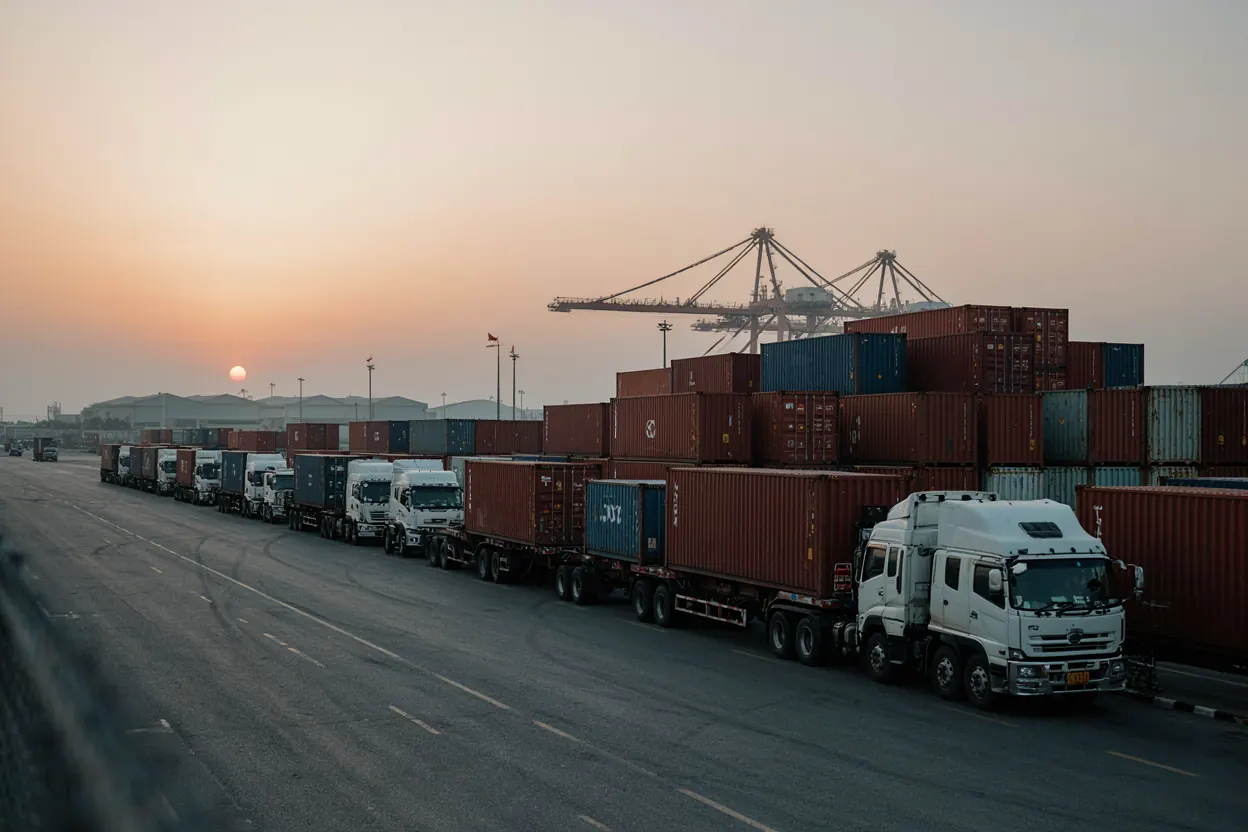
Idling is the fuel cost nobody sees because the odometer does not move. In summer, drivers keep the engine running for the air-conditioning while waiting at a gate, a loading bay, a customs queue or a customer's site, and a heavy diesel at idle burns fuel for every one of those hours. The tracker records every idle period with its duration and location, and the fuel sensor shows what it cost. The platform's idling report ranks vehicles and drivers by idle hours and lets you set an alert for idling beyond a threshold you choose. Fleets do not eliminate idling in a Saudi August, and HHET does not pretend they can; what the report does is separate the thirty-minute wait at a port gate from the two hours a truck ran outside a rest area, and give managers the figures to set a realistic policy.
Sensor types compared
HHET fits three kinds of fuel sensor, chosen by the vehicle, the tank and the accuracy you need.
| Sensor type | How it measures | Best for | Installation | Theft and drain alerts |
|---|---|---|---|---|
| Capacitive rod sensor | A rod cut to the tank depth measures the fuel level directly by capacitance; readings are calibrated to litres | Trucks, buses, generators and any vehicle where accuracy per litre matters | Hole drilled in the tank top, rod sealed in place; most involved installation | Yes |
| Ultrasonic sensor | Mounted under the tank, it measures the fuel height through the tank wall without drilling | Tanks that cannot be drilled, leased vehicles, some plastic and shaped tanks | External, bonded to the tank; accuracy depends on tank shape | Yes |
| CAN-bus / OBD read | Reads the vehicle's own fuel-level and consumption data from the engine network | Newer cars, vans and trucks whose CAN data is available; quick deployment | No tank work; reader connected to the vehicle network | Depends on the vehicle's data resolution |
For most heavy fleets the capacitive rod gives the most reliable litre-level reading and the clearest drain alerts. CAN-bus reads suit mixed car and van fleets where drilling tanks is not practical, and ultrasonic sensors cover the cases in between. HHET recommends per vehicle after a survey, not one sensor for everything.
How calibration works
A sensor reports a raw value, not litres. Calibration is the process that maps one to the other for each tank, and it is done on installation. The tank is run down to a known low level, then filled in measured steps, usually from a calibrated container or a metered pump, and the sensor's raw reading is recorded at each step. The platform stores this as a calibration table for that vehicle, so a reading of a given raw value becomes a known number of litres regardless of the tank's shape. Irregular tanks, which are common on trucks, need more steps than a simple rectangular tank. Calibration is repeated if the sensor is moved, the tank is replaced, or readings drift, and HHET records the calibration data with the installation report so it can be checked later.
Where fuel monitoring fits in the fleet
Fuel monitoring is rarely the whole project. It usually arrives with the fleet management system, which puts the fuel reports beside trips, geofences and maintenance, and it pays back fastest on heavy vehicles, where GPS tracking for trucks already requires a 24 V installation that a rod sensor can share. Operators who want to estimate the return before committing can read our guide to fleet tracking benefits and ROI, which sets out the fuel, maintenance and safety lines separately.
What drives the price
The cost per vehicle depends on the sensor type (a drilled and calibrated rod costs more to fit than a CAN reader), the number of tanks per vehicle (many trucks have two), whether the tracker is already installed, the fleet size and the subscription term. HHET quotes per fleet after a short survey of the vehicles and tanks. Request a quote with your vehicle list and current fuel spend, and HHET will return a sensor recommendation and a line-by-line proposal.
Last reviewed .