

A refrigerated truck has two things that can go wrong on the road: it can be late, and it can be warm. Most fleets in Saudi Arabia watch the first with GPS and discover the second when the customer refuses the load. A gps temperature monitoring device closes that gap by reporting the truck's position and its cargo temperature from the same unit to the same map, so the dispatcher sees both at once and can act while the product is still in range. This page is where HHET's two product lines meet: the truck tracking system that fleets already run, and the sensors and records of the temperature and humidity monitoring system that quality teams depend on.
One map: where the truck is and how cold the cargo is
In a conventional set-up the fleet team watches a tracking screen and the quality team reads a logger after the trip, and the two records are joined, if at all, by someone matching timestamps in a spreadsheet. HHET's reefer monitoring puts both on one timeline. The tracking unit in the cab reads temperature probes in the refrigerated body, a door contact on the rear and side doors and, where the reefer controller allows it, the set-point and unit status. Every report carries position, speed, temperature and door state together. The dispatcher's map shows each truck with its current cargo temperature beside it, colour-coded against its limits. A truck that is running warm in traffic on the Makkah road looks different from a truck that is running cold and on time, and the phone call happens before the delivery, not after.
What is monitored on a reefer
The table lists the signals HHET typically records on a refrigerated truck or trailer. Not every vehicle needs every signal: a frozen-goods van may need one probe and a door sensor, while a multi-compartment pharmaceutical trailer may need several probes, two door sensors and controller data.
| Signal | Source | Why it matters | Typical alert |
|---|---|---|---|
| Position, speed and route | GPS unit | Where the truck is, expected arrival, which routes excursions correlate with | Geofence entry and exit, route deviation, late arrival |
| Cargo air temperature, one or more zones | Probes in the body, placed away from the evaporator outlet | The number the customer and the regulator care about | Above or below limit for longer than the set delay |
| Set-point vs actual | Reefer controller link, or set-point entered per trip | Shows whether the unit is failing or was set wrongly | Actual drifting from set-point; set-point outside the product range |
| Reefer unit status | Controller link where available | Running, defrost, fault codes | Unit off while loaded; fault code |
| Door open and close | Magnetic contacts on rear and side doors | Explains temperature rises; flags unplanned stops | Door open away from a delivery geofence; open longer than planned |
| Ignition and engine | Vehicle wiring | Whether the truck is parked with the unit off | Engine off with cargo loaded and temperature rising |
| Power to the monitoring unit | Internal battery | Record continues when the vehicle is off | Loss of main power |
Set-point vs actual: the number that matters
Most reefer excursions are not failures of the refrigeration unit. They are a set-point that was wrong for the load, a unit switched to the wrong mode, a body that was not pre-cooled before loading, or a door that stayed open at a stop. The way to tell these apart is to record what the unit was asked to do alongside what the cargo actually experienced. Where the reefer controller provides it, the HHET unit reads the set-point directly; otherwise the dispatcher enters the required range per trip. The platform then alerts on two conditions: actual temperature outside the product range, and actual temperature drifting away from set-point while the unit is running, which is the early signature of a unit losing capacity. Multi-compartment bodies are monitored per compartment, since a chilled zone and a frozen zone on the same truck have different limits.
Door sensors and the dock
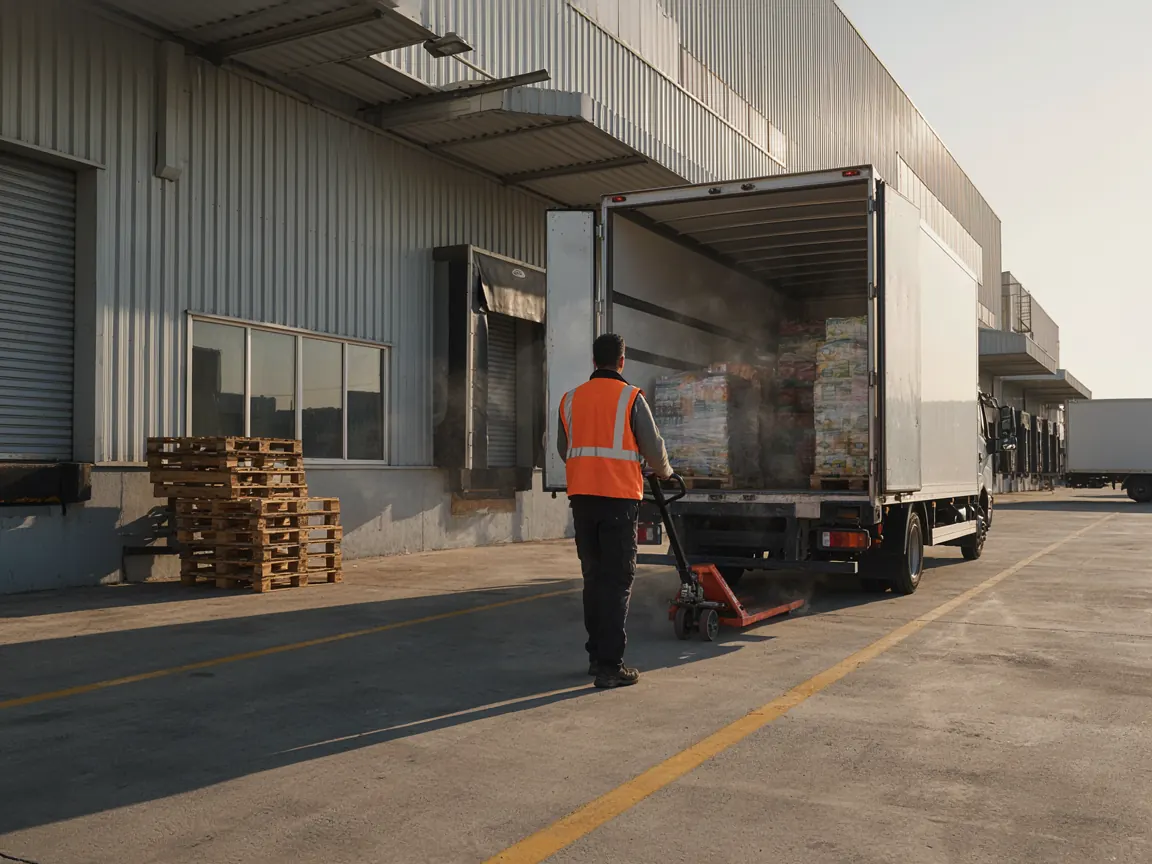
A door contact turns an unexplained rise in temperature into an explained one, and it does something tracking alone cannot: it shows what happened at the stop. The platform marks each door opening on the temperature trend with its duration and location. Openings inside a customer's delivery geofence are expected and are reported as part of the delivery; openings elsewhere are flagged. Over a month, the door record shows which deliveries routinely take too long with the doors open and which drivers close up between drops. The dock at your own site is covered too: the door contact and the body probe together show whether a truck was pre-cooled before loading began, which is one of the most common and least noticed causes of a warm arrival. Combined with GPS arrival and departure times, the door record also settles disputes about how long a vehicle waited at a customer's dock.
Excursion alerts in transit
An alert during a journey has to reach someone who can do something, with enough information to decide what. HHET configures transit alerts with a delay matched to the product, so a two-minute door opening at a delivery does not alarm but ten minutes above limit does. The first alert goes to the dispatcher by app and SMS with the truck, the compartment, the current temperature and the trend; the dispatcher calls the driver, who can check the unit or close the doors. If the excursion continues, the alert escalates to the fleet or quality manager. Every alert and acknowledgement is logged against the trip. On long inter-city legs across the Kingdom, this is often the only thing standing between a slow unit failure and a full load lost.
Give the dispatcher one screen, not two. When position and temperature arrive in separate systems, the warm truck is noticed by whoever happens to be looking at the second screen. When they arrive together, the truck that is late and warm is the first thing anyone sees.
Proof-of-temperature reports per delivery
The record that ends arguments is a per-delivery report. For each consignment the HHET platform produces a document showing loading time and location, cargo temperature through the journey against its limits, every door event with location, arrival time inside the customer's geofence, and the hand-over temperature. It can be exported as PDF for the delivery file or shared with the customer as a link, and for pharmaceutical consignments it forms part of the transport record described on the SFDA temperature monitoring page. Pharmaceutical and food distributors are the main users; the pages for pharmaceutical distributors and food and catering distribution describe how the reports fit each sector's compliance routine. Over time, the same reports become the fleet's cold chain tracking record, feeding the end-to-end picture covered under cold chain monitoring.

Fitting reefer monitoring to your fleet
Where HHET tracking is already installed, reefer monitoring is usually an addition to the existing unit: temperature probes routed into the body, door contacts fitted, and the controller link connected where the reefer model supports it. Where a fleet is new to HHET, the tracking and temperature hardware are installed together, typically in your yard. Trailers that are swapped between trucks are fitted with their own monitoring unit so the record stays with the body. For legs carried by third-party hauliers without HHET units, a portable logger travels with the product; the guide to what a data logger is and how to choose one covers the options. Once installed, reefer vehicles appear in the same fleet management system as the rest of the fleet, with temperature as one more column in dispatch, playback and reports. Price depends on the number of vehicles and compartments, whether controller integration is available for your reefer models, door sensors, calibration certificates and the subscription. To scope reefer monitoring for your trucks or vans, request a quote with your vehicle count and the products you carry.
Last reviewed .