

Car rental GPS tracking puts a tracker in every car on the lot so the company knows where each one is, how far it has been driven and whether it is still inside the contract. It is a specific application of a vehicle tracking system: the vehicle changes hands daily, the driver is a customer rather than an employee, and the loss, when it happens, is the whole asset. HHET supplies and installs tracking for rental, taxi and company vehicle fleets from Jeddah to customers across Saudi Arabia.
Why rental and taxi fleets track every car
A delivery fleet worries about fuel and time. A rental fleet worries about three other things, and tracking addresses each.
- The car that does not come back. A late return is a phone call; a vehicle that has left the country or is parked in a yard is a theft. A live position shortens the gap between the two to minutes.
- Disputed mileage and contract breaches. The odometer tells you the total, not where. The tracker records the trip history, so a claim that the car stayed in Jeddah can be checked against a trail that went to Riyadh.
- Accident and damage disputes. A time-stamped speed log helps the company establish what happened, which matters for insurer discussions.
Taxi tracking adds a fourth need: dispatch. A taxi company needs to know which car is nearest to a booking, how many hours each car works, and whether a driver is on shift. The company vehicle tracking used by firms that lend cars to staff follows the same pattern, with trips, personal-use limits and out-of-hours alerts.
WASL linking for rental and taxi activities
Car rental and taxi activities are licensed by the Transport General Authority (TGA), and operators are typically required to link each vehicle's tracking device to the WASL platform so the authority can see position and status. Rules differ by activity, vehicle category and licence type, and are updated from time to time. Confirm what applies to your licence with TGA, and ask HHET to confirm the WASL approval status of the specific device model before you buy it.
In practice the steps are the same for each vehicle: choose a device from the approved list for the activity, install it and record the plate and chassis number, register the link on WASL and keep the installation report with the vehicle file. A rental company that rotates cars through the fleet should repeat the registration whenever a plate changes or a vehicle is replaced, or the platform and the authority records drift apart. The wider process, including how the integration works, is set out in our guide to TGA-approved tracking and WASL integration.
Geofences, mileage and contract limits
The platform turns the contract terms into rules the tracker checks every few seconds.
- Territory. Draw the permitted region as a geofence, a city, a province or a corridor between two cities. An alert fires the moment the car leaves, with the position, so the counter team can call the customer while the car is still near the boundary. See geofencing explained for how zones are drawn and tested.
- Border and no-go zones. A separate geofence around borders and ports can trigger a high-priority alert, and many companies add one for areas they prohibit by contract.
- Mileage allowance. The platform totals kilometres per rental from handover to return. When the daily allowance is exceeded, the manager is told, so excess mileage is billed on a figure from the tracker rather than from memory.
- Speed. A speed ceiling per contract class, with the events recorded for the file.
- Return control. An alert when a car has not returned by the contract end time, escalated at set intervals.
Most rental software can receive position and mileage from the platform, so the contract record and the tracking record agree. HHET can discuss integration options for your system during the survey.
Theft recovery and engine cut-off
When a car is reported stolen, the first hour decides the outcome. The platform shows live position with a refresh every few seconds, and a trail of where the car has been, which tells the police whether it is moving toward a highway or sitting in a yard. Alerts for power disconnection and for movement with the ignition off warn the company before the customer does.
Many fleets add an immobiliser relay, which allows an authorised user to stop a car remotely. This must be done safely: the platform only accepts the command once the speed is below a set limit, so the car is never stopped at highway speed, and each cut-off is logged with user and time. For rental companies, the main use is controlling a car that has not been returned, with the decision, the contract basis and the paperwork handled by the company. HHET's anti-theft GPS tracker with engine cut-off page covers relay installation and fail-safe wiring in detail.
Devices for rental fleets
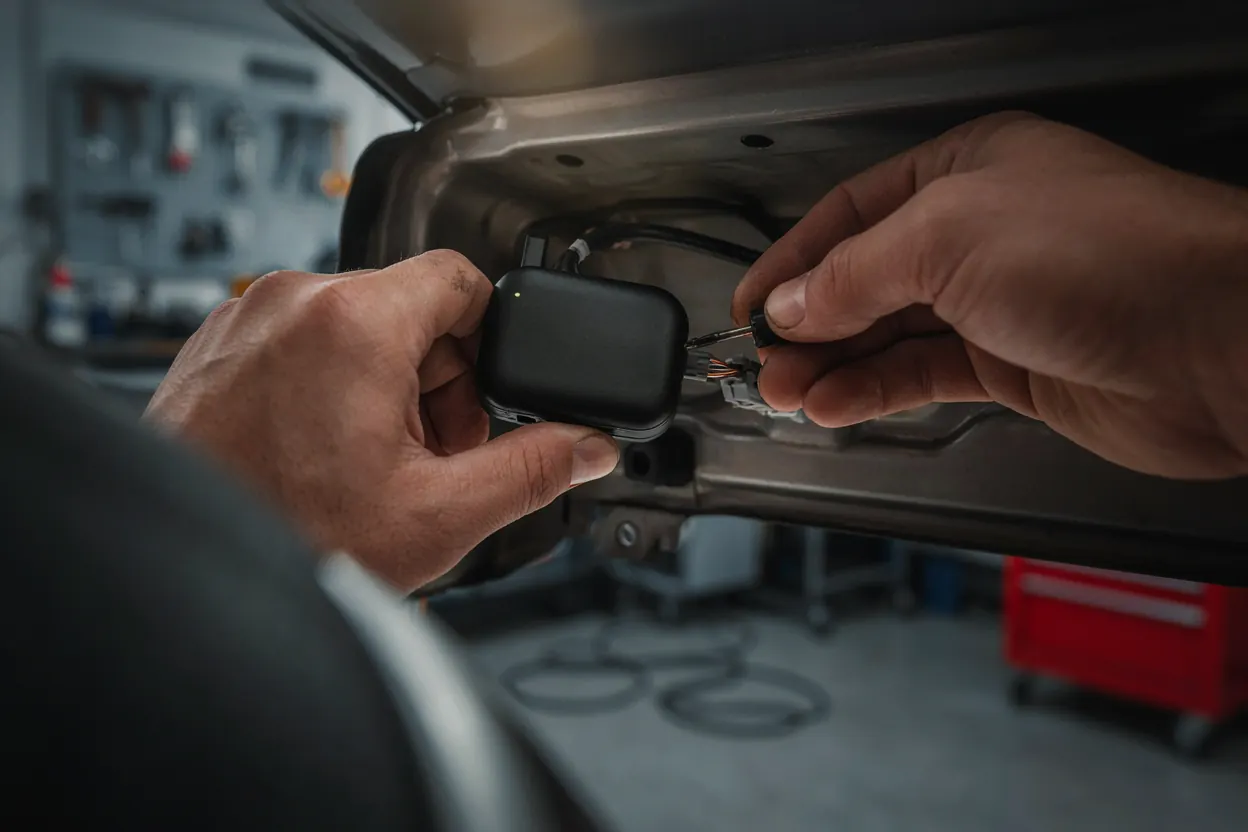
A rental lot has two competing needs: fast fitting, because a car off the road earns nothing, and tamper resistance, because the user is a stranger. HHET therefore uses two installation styles side by side.
| Installation | Fitting time | Tamper resistance | Best for | Engine cut-off |
|---|---|---|---|---|
| Hardwired behind the dashboard | Under an hour on most cars | High: concealed, wired to the battery and ignition | Core rental fleets, long-term vehicles, taxis | Yes, with relay |
| OBD plug-in | Minutes | Low: can be unplugged, so a removal alert is essential | Short-term fleets, staff cars, vehicles rotated often | Generally no |
| Battery-powered hidden unit | Minutes | Medium: concealed, but battery-limited | Backup unit on high-value cars | No |
Hardwired is the standard for rental. Where a company buys cars in batches, HHET can install them on the lot against a list of plates, so each tracker is matched to the vehicle in the platform before the car goes out. The fitting is the same method used for single cars, described in our GPS installation service. Taxi fleets can add a meter or driver-ID input, and the company can pair the vehicle, the shift and the driver.
What drives the price
The cost per car depends on the installation type, whether an immobiliser relay is included, the fleet size, the SIM and data plan, and the subscription term. A small taxi company and a rental business with a lot in each major city will have different survey needs. Request a quote with your fleet count, vehicle types and the activities you operate, and HHET will return a proposal that includes WASL steps where your licence calls for them.
Last reviewed .