
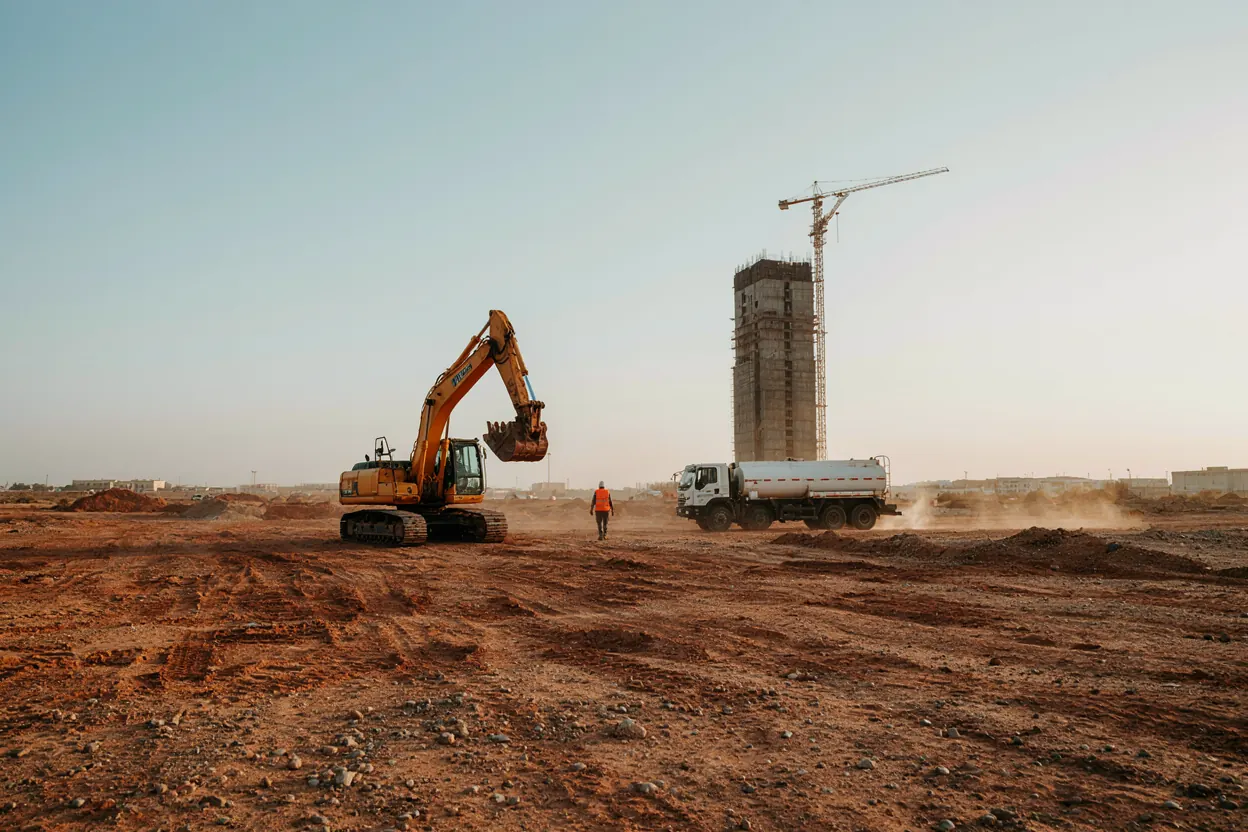
An asset tracking device is a self-contained tracker fitted to equipment that is not a road vehicle, or not driven like one: generators, compressors, excavators, loaders, light towers, scaffolding and high-value tools. The question it answers is "where is it, is it running, and has anyone moved it?" It extends the vehicle tracking system to equipment, and HHET supplies, fits and supports it from Jeddah for owners, hire companies and contractors across Saudi Arabia.
What asset tracking covers
Equipment differs from vehicles in ways that decide the device. It may have no ignition signal, as a generator runs without a key. It may sit unused for weeks on a site, then be moved on a lowbed without warning. It may be rented out, so the owner needs usage data and location, not driver behaviour. And it may have no vehicle battery to draw on, or a very noisy electrical system. The platform therefore treats each asset as a record with a type, an owner, a site and an engine-hours count, and reports on four things.
- Location. Where the asset is now and where it has been, which is enough to find a loader that "was on the other site".
- Usage. Engine hours, idle time and working time, taken from the device's own measurement, so it does not depend on an operator's log.
- Movement. Alerts when the asset leaves its site or moves outside working hours.
- Condition. Battery state, power disconnection and, where the machine exposes it, fault codes.
Heavy equipment on a public road, such as a lowbed carrying an excavator, remains a case for GPS tracking for trucks, and trailers are covered on the trailer and container tracking page.
Engine hours and utilisation
Hire rates, service intervals and warranty claims on heavy equipment are tied to engine hours, not kilometres. A tracker can count hours in three ways: from the ignition or an accessory wire, from an alternator signal (the machine is charging, so it is running), or from vibration sensed by the device itself, which suits machines with no practical wire to tap. The platform converts the count into a utilisation percentage: hours worked divided by hours available.
Utilisation is the figure that makes asset tracking pay. A machine that works 30% of the shifts it is on site is a candidate for redeployment or return to the hire company. One that works 95% is a candidate for a second unit, and a service schedule set from real hours, not calendar dates, avoids both early and missed servicing. Compare that with the vehicle side, where speed and braking decide the cost, as in driver behaviour monitoring; for equipment, hours decide it.
Site geofences and after-hours movement
Each site is drawn on the map as a geofence, and each asset is assigned to one. If a machine leaves the fence, an alert goes to the site manager with its position. Layered on that is a working-hours schedule: any movement between, say, 18:00 and 05:00 is treated as suspect and raised as high priority. Theft of equipment often takes place on weekends and at night, when a lowbed can leave a site unquestioned, and an after-hours alert is usually the first warning.
A geofence can also record time on site, which becomes evidence for billing: the hire company can show a client that a crane was on its yard for 19 days, and a contractor can check the invoice against the log. The geofence method is described in our guide to geofencing explained.
Devices for generators, excavators and tools
No one device suits all equipment, so HHET matches the tracker to the asset.
| Asset | Device type | How hours are counted | Power | Remarks |
|---|---|---|---|---|
| Excavator, loader, crane | Hardwired 12/24 V tracker | Ignition or alternator signal | Machine battery with backup | Mounted in the cab or a sealed box; protected from dust and vibration |
| Generator, compressor, light tower | Hardwired tracker or battery tracker | Alternator, vibration or fuel-run signal | Machine battery or internal battery | Often no ignition; vibration or output signals are used |
| Lowbed trailer, plant on wheels | Solar or battery tracker | Motion | Internal battery, solar-assisted | Moves between sites without a tractor of its own |
| Scaffolding, containers, tool cabinets | Compact battery tracker | Not applicable | Internal battery, long reporting interval | Reports a few times a day; motion wakes it |
All of them must survive dust, heat and shock. HHET specifies sealed housings (IP67 or better for outdoor use is typical), mounts that avoid the hottest panels, and an antenna position with a clear view. The choice among wired, OBD and battery families is explained in our guide to GPS tracker types.
Theft recovery
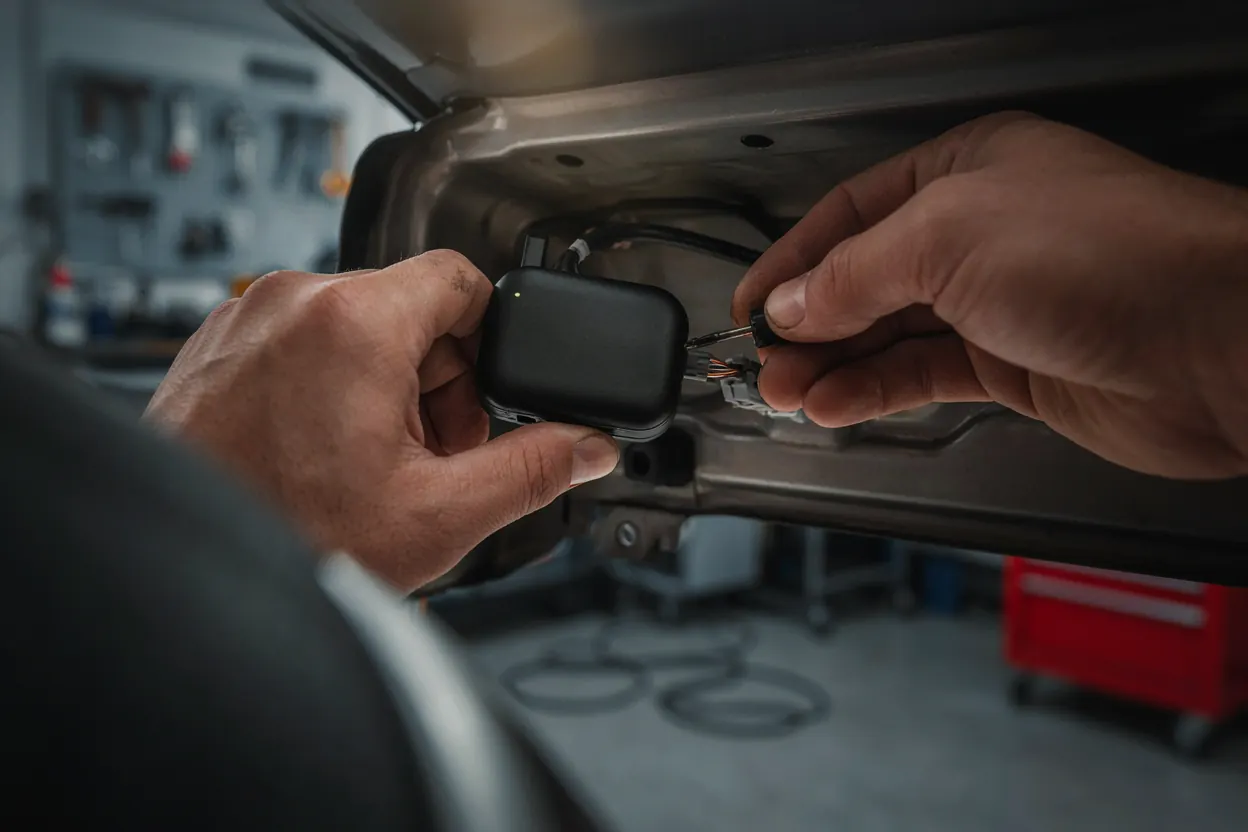
Stolen equipment is moved quickly, usually on a trailer, and often hidden for a while. The tracker's value is the first hour: a movement alert, a position every few seconds, and a trail showing the route. Hidden mounting, where the unit sits inside the machine body rather than in an obvious place, makes removal harder, and a power-disconnection alert tells you if someone cuts the supply. Battery backup keeps the unit reporting afterwards for a limited time. For machines with an electrical start, an immobiliser relay can stop the engine from starting when it is not authorised, with the same safeguards used for road vehicles.
When equipment is moved, HHET's platform gives police a position and a trail, and the owner can export a report. Recovery depends on how fast the alert is acted on, so the platform lets you name who is called and in what order.
Fit trackers to the highest-value and most-moved assets first. A tracked excavator and an untracked generator on the same site leave a gap, but a fleet-wide rollout can follow once the reports show which classes of equipment move most.
Getting started and pricing
Asset tracking is an easy way to start with a mixed equipment list, because the same platform shows vehicles and assets together. Cost depends on the device type, the number of assets, reporting interval, extra sensors and the subscription term. Request a quote with a list of the equipment types you own or hire out, and tell us where it works; HHET will recommend a device for each class.
Last reviewed .