
An inspector walking into a kitchen asks two things about the cold side: what temperature is the food held at, and can you prove it was like that last Tuesday. This page covers temperature monitoring built around those questions for restaurants, central kitchens and caterers, so the HACCP log writes itself instead of depending on someone remembering a clipboard.
HACCP critical control points
HACCP (Hazard Analysis and Critical Control Points) is a food safety method: you identify the steps where a hazard can be controlled, set a limit for each, monitor it and decide in advance what to do when the limit is missed. In a kitchen, temperature turns up at nearly every critical control point. Cold storage of raw and ready-to-eat food, cooking to a core temperature, hot holding, cooling cooked food down, and transport to an event each have a limit and a record.
The limits come from your own HACCP plan and the rules that apply to your activity. As a widely used reference, chilled food is commonly held at or below about 5 °C and frozen food at -18 °C or colder, but the figure that applies to you is the one in your plan. Continuous sensors cover the stages that stay still: fridges, freezers, blast chillers, cold rooms and display units. Probe thermometers still have their place for cooking and hot holding checks, and the records can be kept in the same app.
| Control point | How it is checked | Role of the HHET system |
|---|---|---|
| Chilled storage | Continuous fridge or cold-room sensor | Automatic log, alert on excursion |
| Frozen storage | Continuous freezer probe | Automatic log, power-loss alert |
| Cooling after cooking | Time and temperature at intervals | Blast-chiller sensor with timed log |
| Hot holding | Spot probe check | Manual entry in the app, if used |
| Delivery to site | Vehicle or insulated box sensor | Trip record, see refrigerated vehicles |
Restaurant, central kitchen and catering monitoring
A single-site restaurant needs little: a sensor in each fridge and freezer, one in the dry store if humidity is a worry, and a phone that rings when something fails. Opening hours are not the risk. The risk is the walk-in freezer that fails at 1 a.m. on a Friday, before a weekend of bookings, with nobody on the premises.
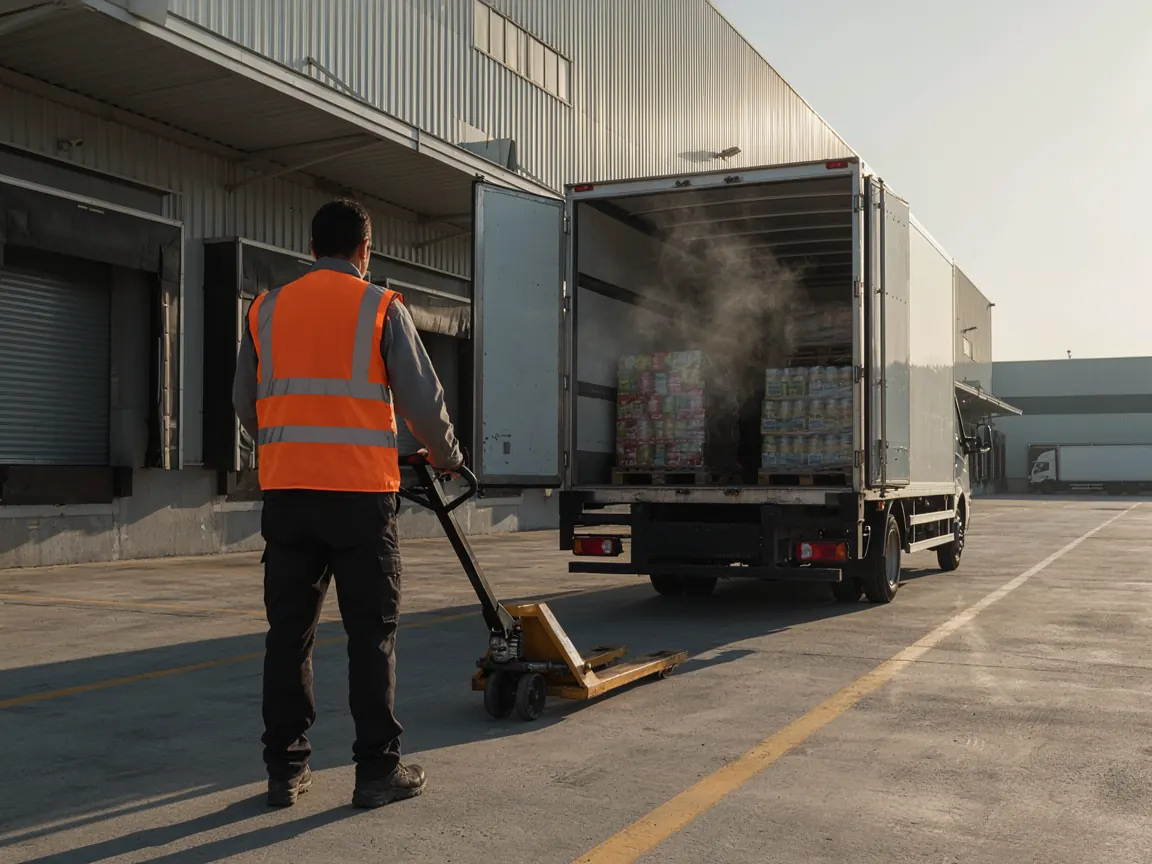
A central kitchen is a different scale. It prepares for several outlets, cools batches in volume and dispatches daily, so the record needs to follow the food: which cold room it sat in, how long it took to cool, and what the delivery vehicle held. Outlets and the central kitchen appear on one dashboard, with one report per site. Catering operations add the problem of events: food is prepared in one place, kept in insulated boxes or a vehicle and served somewhere else. Portable loggers in transport boxes, together with refrigerated truck monitoring for the vehicle, give a record from the kitchen door to the serving table.
Jeddah kitchens are hot. Fridges in cramped back-of-house areas struggle first in summer, and condenser fouling is a common cause. A rising trend over several days is often the first sign, before any alarm limit is crossed, and the platform graph makes it visible.
Fridge and freezer sensors
Placement decides whether the number means anything. In a fridge, a probe in the air near the door reads the warmest and most variable spot; a probe buffered in a small bottle of liquid follows the food and ignores the swings when the door opens. HHET fits buffered probes where the limit refers to the product, and air sensors where the concern is the equipment. Freezers need a probe rated for the low temperature, and a cable path that does not hold the door open.
Wireless sensors work in most kitchens, but steel cold rooms and thick insulation block radio, so the gateway is placed outside the room with a short cable run through the wall for an external antenna where needed. The full picture of walk-in rooms is under cold room monitoring. Sensor choice, accuracy and calibration are covered under temperature and humidity sensors, so this page does not repeat them.
- Alert limits. Set a warning slightly inside the HACCP limit and an alarm at it, so the team can act before food is affected.
- Door delay. A delay avoids alarms during deliveries, but only as long as the food can safely tolerate.
- Corrective action. The alert can ask the responder to record what they did: moved stock, called an engineer, discarded product.
What changes for the kitchen team
Staff notice three things in the first week. The morning fridge check is no longer a clipboard round; the manager opens the status screen and looks for anything flagged. Alarms arrive on a phone instead of being discovered at opening time. And when a delivery driver props a cold-room door open for twenty minutes, the graph shows it, which usually changes behaviour faster than a notice on the door. The kitchen's food safety lead keeps full control of limits and corrective actions, and can review the week's exceptions in a few minutes. Where a business has several outlets, the same screen shows which site had the problem, which is more useful to an area manager than a stack of paper from each.
Automatic temperature logs for inspections
A paper log has a familiar flaw: it is often filled in at the end of the shift, from memory, in a handwriting that looks suspiciously similar from day to day. An automatic log has timestamps nobody can adjust and no gaps unless the device fails, and in that case the failure is itself recorded. Reports can be generated for any fridge, any date range or any site, and exported as PDF or spreadsheet for the inspector, the auditor or a customer who asks for proof.
Food businesses in Saudi Arabia are inspected under the rules of the Saudi Food and Drug Authority (SFDA) and municipal authorities, and the requirements for your activity and licence can differ. HHET provides the temperature records; the HACCP plan, limits and corrective actions remain the responsibility of your food safety team. Confirm current requirements with the authority that licenses you before relying on any record format.
The result is not less work for the food safety officer but different work: reviewing exceptions instead of collecting numbers. The guide to HACCP temperature logging explains what a good log contains and how long to keep it. To plan a system for your kitchens, request a quote with the number of fridges, freezers and sites.
Last reviewed .